196 Artists Residency / Sunday Dinner
Hosting, onboarding, facilitation, and continuity systems
Created repeatable hosting, onboarding, facilitation, documentation, and continuity systems across 300+ gatherings and 20+ resident artists.
What to know first
- My responsibility
- Host, Organizer & Systems Steward
- What became usable
- Repeatable participation infrastructure for gatherings, resident artists, onboarding, facilitation, and handoffs.
- Evidence to inspect
- 300+ hosted gatherings
- 20+ resident artists supported
At a glance
- Role
- Host, Organizer & Systems Steward
- Years
- 2010s-present
- Context
- Participation Infrastructure
- Status
- Short proof page
- Visibility
- summary-only
- Role fit
- Community operations, onboarding, facilitation, documentation, trust-building systems, and continuity planning.
Context
196 Artists Residency / Sunday Dinner was cultural infrastructure: recurring gatherings, artist support, hosting, onboarding, facilitation, and continuity work that depended on trust as much as logistics.
What was unclear
The challenge was how to keep participation open, generous, and repeatable without exposing private community records or turning a living social practice into an archive that violated consent.
What became usable
A protected working record independently corroborates the 300+ gathering scale while keeping every participant row private. It is evidence of recurring operational continuity, not a unique-person or precise attendance census.[1]
Jamie documented a repeatable residency handoff: proposal review, video-call onboarding, space configuration, and independent access for the resident artist and a collaborator.
Jamie used a structured operating sheet to coordinate recurring Sunday Dinner invitations, responses, attendance, and follow-up while keeping participant records private.
Public event pages preserve a 100th Sunday Dinner milestone in 2014, naming Jamie as organizer, and a 200th in 2016, naming Julia Fredenburg and Jamie as co-organizers. The numbered titles are contemporaneous records, not an independent audit of every gathering.[2][3]
Two public-safe handoff specimens
These reconstructions show the form of the work while withholding every participant-level value.
Redacted workflow reconstruction
A resident artist can arrive and work independently
The sequence is derived from a governed 2023 acceptance workflow. It shows the handoff structure, not the artist's identity, proposal, access details, or outcome.
- 01
Receive
Review the artist's proposal as an opening for inquiry rather than a contract for a predetermined result.
- 02
Orient
Use a video call to learn what the artist and collaborator need and to make expectations discussable.
- 03
Configure
Prepare the apartment, working conditions, equipment context, and local orientation around the actual practice.
- 04
Hand off
Provide the practical knowledge needed for independent access and day-to-day work.
- 05
Remain available
Support changes in direction while preserving the artist's agency over the residency.
Boundary: No names, addresses, access instructions, messages, proposals, photographs, or claims about artistic outcomes are published here.
Redacted workflow reconstruction
A recurring gathering can continue without exposing its participants
The sequence is derived from the schema of a protected operating sheet. It shows the coordination logic while keeping all rows and values private.
- 01
Invite
Prepare a recurring invitation that makes the occasion and its open social form understandable.
- 02
Receive
Track responses closely enough to prepare the gathering without turning relationships into public data.
- 03
Host
Arrange food, space, welcome, introductions, and the practical conditions for people to be together.
- 04
Document
Maintain the minimum continuity record needed for follow-through while protecting participant context.
- 05
Continue
Follow up, carry relationships forward, and make the next gathering possible.
Boundary: The operating schema supports this reconstruction; participant names, contacts, invitation and attendance histories, free text, and private correspondence remain outside the public site.
What I did
The work included invitations, hosting rhythms, artist support, access handoffs, space-making, documentation practices, and the quiet logistics that let recurring community work keep happening.
Transferable proof
The operating evidence remains deliberately aggregate. Guest lists, contact details, invitation and attendance histories, private correspondence, access details, and unapproved additional images stay outside the public site. The role fit is clear: onboarding, facilitation, trust-building systems, continuity planning, stakeholder care, and operations for complex human environments.
Sources and notes
These notes preserve what each source supports and where its limits remain. See something that needs correction? Contact Jamie.
View 3 source notes
The control file preserves reproducible aggregate facts and boundaries while excluding raw database rows, private workbook rows, identities, and authenticated-session data.
Boundary: This source does not establish current product activity, unique Sunday Dinner participants or precise attendance, sole authorship or sole coalition founding, endorsement, mandate, conversion, causality, or policy impact.
[2] 'SUNDAY DINNER Turns 100!,' Facebook event, March 9, 2014.
The public event page names Jamie as organizer and presents the gathering as the 100th Sunday Dinner.
Boundary: This source does not establish an independent audit of 100 gatherings, attendance, sole production, the complete Sunday Dinner history.
[3] '200th Sunday Dinner! Special! Wow! Amazing! Interesting!,' Facebook event, June 26, 2016.
The public event page names Julia Fredenburg and Jamie Burkart as co-organizers, presents the event as the 200th Sunday Dinner, and links to a WOW List event page.
Boundary: This source does not establish an independent audit of 200 gatherings, attendance, sole production by Jamie, the complete Sunday Dinner history.
Primary artifacts
- photo sequence
- workflow
- template
Artifact gallery
workflow / 01
Residency onboarding handoff
A redacted reconstruction shows proposal review, orientation, space configuration, independent access, and continued support without exposing participant or access details.
template / 02
Recurring gathering operations
A second reconstruction shows invitation, response, hosting, minimal continuity documentation, and follow-up while every participant-level value remains private.
Scope and sources
Known
Jamie created and sustained participation infrastructure across recurring gatherings and artist-residency contexts.
Open
Additional named participants, photographs, and artifacts require consent and approval.
Protected
Raw guest data, private records, attendance lists, addresses, and unapproved images are omitted.
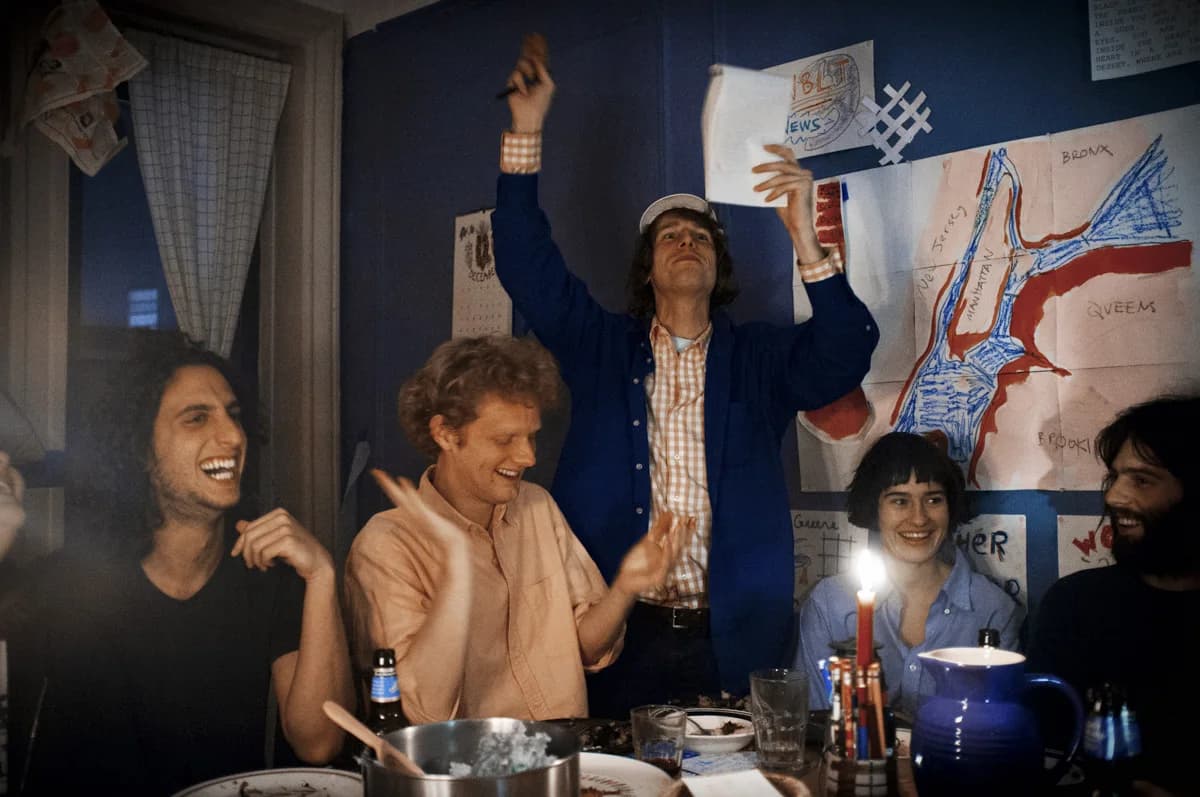
Source basis: Public-safe summary, one human-reviewed project photograph cleared for this portfolio display with a Sunday Dinner NYC courtesy credit, and private records intentionally omitted.
Claim and care limits
Summary-only page. Raw guest data, attendance records, private community records, and unapproved additional photos stay offline.
Credits
- Jamie Burkart
- 196 / Sunday Dinner community