CallNYC.org
Civic data to resident-facing guidance
Built an independent civic-data follow-on translating CouncilStat constituent-services records into resident-facing issue pathways and next-step guidance.
What to know first
- My responsibility
- Civic-Tech Builder & Product Translator
- What became usable
- An archived civic-tech prototype that organized open data into issue pathways, district context, and resident-facing guidance.
- Evidence to inspect
- Independent follow-on to the New York City Council's first CouncilStat hackathon
- Translated CouncilStat / constituent-services open data
At a glance
- Role
- Civic-Tech Builder & Product Translator
- Years
- 2016 - archived
- Context
- Civic Prototype
- Status
- Full case study
- Visibility
- public-safe
- Role fit
- Civic technology, product translation, open-data workflows, resident guidance, and public-facing web systems.
Context
On January 30, 2016, the New York City Council held a 1-3 p.m. hackathon at Civic Hall focused on constituent services.[1][2]
The Council described the gathering as its first CouncilStat hackathon.[2]
After the fuller CouncilStat dataset was released, Jamie developed CallNYC.org as an independent public-facing interpretation of those constituent-services records.[3][4]
What was unclear
The data carried civic signal, but a public dataset was not yet a resident pathway. A person still needed to understand what an issue meant, which office or district context might matter, what next step was reasonable, and where the source data could mislead.
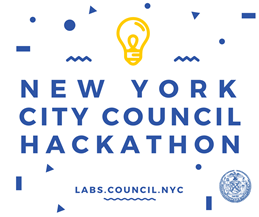
The surviving promotional graphic uses the branding 'New York City Council Hackathon.'[5]
That source documents the visible event brand, not a longer formal registration title.
What I did
Jamie built the independent prototype, organized records into issue pathways, and translated administrative categories into public-facing guidance. A person could enter through a recognizable concern instead of first understanding the complete dataset. CallNYC was not commissioned by the Council, documented as a formal hackathon submission, or presented as an official City service.
What became usable
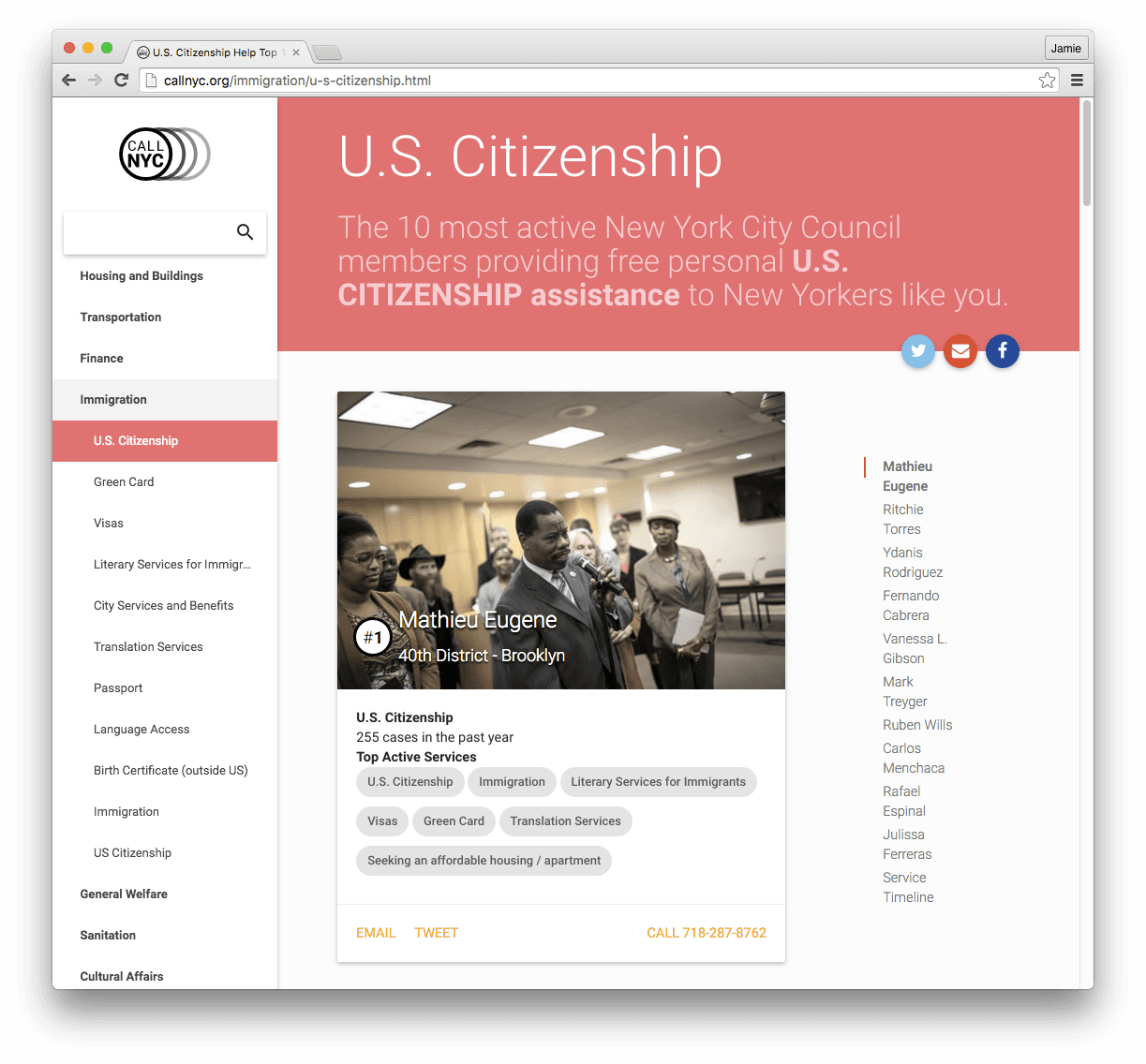
The prototype organized constituent-services records into issue pages, district context, and possible next steps. It treated data translation as a product and information-architecture problem: map a difficult source to the decisions a person needs to make, build a focused pathway, and keep limitations inside the product.
Outcome and evidence
Politico New York covered CallNYC on March 14, 2016, connecting Jamie's independent project to the January gathering and the later fuller CouncilStat data release.[3]
CallNYC paired 61 resident-facing issue pages with recognition posts directed to 26 Council accounts. A full-population disposition pass recovered attributable interactions from at least 19 serving Council member accounts, including public reposts and six member-authored posts or replies.[6][7]
The public repository preserves the implementation. Together, the prototype, reporting, and source trail show a small but complete civic product: source data, information architecture, interface delivery, iteration, public documentation, and explicit scope limits.
Sources and notes
These notes preserve what each source supports and where its limits remain. See something that needs correction? Contact Jamie.
View 7 source notes
The archived Civic Hall page preserves the embedded social post. It is not a recovered Civic Hall calendar listing or event-detail page.
Boundary: This source does not establish a recovered Civic Hall calendar listing, a dedicated event-detail page, the complete formal event title, the agenda, the participant roster.
The source supports the narrower 'first CouncilStat hackathon' wording, not a broader historical superlative.
Boundary: This source does not establish broader historical hackathon superlatives, the full agenda, a complete attendee list, formal winners, CallNYC as an official submission.
The reporting connects Jamie to the January event, the fuller data release, and his independent development and iteration of CallNYC.
Boundary: This source does not establish CallNYC as an official Council product, CallNYC as a formal hackathon submission, CallNYC as a documented winner.
[4] Public CallNYC source repository.
The repository documents the surviving implementation of the independent, archived prototype.
Boundary: This source does not establish official Council ownership, formal hackathon submission status, current resident-service guidance.
The graphic supports the visible event branding, not a longer formal registration title.
Boundary: This source does not establish a longer formal registration title, the agenda, breakout structure, participant roster.
[6] CallNYC X population disposition and URL manifest, July 15, 2026.
A public-safe machine-readable manifest of 110 population dispositions, 84 posted URLs, engagement summaries, and named public-official interaction ledgers; raw post bodies and session data are excluded.
Boundary: This source does not establish 110 recovered post bodies, individual account authorship, permanent platform metrics, formal endorsement, reasons the three records were not recovered.
[7] New York City Council, minutes of the stated meeting, September 28, 2016.
The official roster corroborates that the 19 named people in the reviewed CallNYC ledger were serving Council members in 2016.
Boundary: This source does not establish control of social accounts, authorship of every post, endorsement of CallNYC, a complete engagement census.
Primary artifacts
- prototype
- guide
- map
- press
Artifact gallery
prototype / 01
Issue pathway prototype
Public-facing page patterns that moved from constituent issue to relevant office, district context, and possible next step.
Original CallNYC launch interface, 2016. It documents the historical product; the current public instance remains archived, unofficial, and non-current.
View Original CallNYC press-kit screenshotmap / 02
Open-data translation layer
An independent interpretation layer built from CouncilStat constituent-services records.
press / 03
Archived press note
Politico New York covered CallNYC in 2016 as a public way to explore City Council constituent-services data.
Scope and sources
Known
CallNYC independently translated CouncilStat constituent-services records into issue pathways and resident-facing guidance as an archived prototype with 2016 Politico New York coverage.
Open
Additional screenshots and archive links require separate review before publication.
Protected
No current-service claims, official city affiliation claims, private user data, or unverified guidance are published.
Source basis: CouncilStat / constituent-services open data, archived project context, verified Politico New York coverage, public GitHub repository, and an approved original-launch screenshot.
Claim and care limits
Archived civic-data prototype. Not an official or current City Council service, legal service, emergency service, or comprehensive civic guidance source.
This page must make the archived and unofficial status visible wherever the project is summarized.
Public links
Credits
- Jamie Burkart
- Civic-data collaborators