Harry J. Epstein Company
E-commerce and operations modernization
Led web, e-commerce, analytics, content, marketing, and operational improvements that helped an 80+ year-old industrial business modernize without losing its trusted voice.
What to know first
- My responsibility
- Technical Project Manager & Web Systems Lead
- What became usable
- Improved web, e-commerce, analytics, marketing, content, and operational systems that supported online growth while preserving the company's distinctive institutional voice.
- Evidence to inspect
- Web, e-commerce, marketing, content, and analytics systems
- Operations workflow improvements and long-term systems stewardship
At a glance
- Role
- Technical Project Manager & Web Systems Lead
- Years
- 2009-2015
- Context
- Operating Structure
- Status
- Full case study
- Visibility
- public-safe
- Role fit
- Technical operations, product operations, implementation, business analysis, documentation, and small-business web systems.
Context
Harry J. Epstein Company is an 80+ year-old industrial tool business with deep customer trust, a distinctive public voice, and institutional knowledge spread across people, inventory practices, product history, vendors, and customer conversations.
The work was a long-running implementation problem, not a website refresh: participate in modern e-commerce without flattening the specificity, humor, and product judgment that made the business valuable. Product knowledge needed a useful public form, while analytics, marketing, content, customer communication, and operations needed to work as one maintainable system.
What I did
Jamie maintained and improved the web and e-commerce presence, supported analytics and marketing, structured reusable content patterns, translated between technical and nontechnical needs, and turned recurring operational questions into clearer workflows.
In practice, that meant clarifying requirements, shaping product information for customers, coordinating incremental releases, interpreting what analytics could and could not establish, and keeping the public experience aligned with the company's voice. The product-operations work joined customer experience, internal habits, content, marketing, and technical stewardship without exposing sensitive operating detail.
Public-safe operating specimen
From recurring question to maintainable release
This reconstruction makes the long-running maintenance and handoff pattern inspectable without reproducing an internal workflow document.
- 01
Listen
A customer or team question reveals friction in product information, publishing, commerce, or follow-up.
- 02
Frame
Jamie translates the question into a well-scoped requirement and names what available analytics can and cannot establish.
- 03
Implement
The team ships an incremental change to content patterns, product information, marketing, or the e-commerce surface.
- 04
Verify
Jamie inspects the public customer path and reviews operational or analytical signals with stakeholders.
- 05
Continue
Reusable patterns, ownership, and next actions preserve the work for staff and later maintainers.
Boundary: Derived from the governed public claim set. It is not an original company document and exposes no customer data, private analytics, revenue detail, vendor terms, credentials, or sensitive operating practices.
What became usable
Customers gained a more coherent surface for finding products, understanding the company's point of view, and ordering. Internal stakeholders gained more repeatable patterns for product communication, marketing, e-commerce operations, and customer follow-up.
Outcome and proof
Jamie's work contributed to 2x revenue growth while helping translate legacy operating knowledge into durable digital workflows. The public storefront is inspectable below; private dashboards, revenue breakdowns, customer data, and internal operations remain private.
For hiring teams, this is private-sector proof of technical project management, product operations, business analysis, stakeholder translation, incremental implementation, and long-term systems stewardship.
Primary artifacts
- website
- workflow
- analytics summary
- public-safe screenshot
Artifact gallery
public-safe screenshot / 01
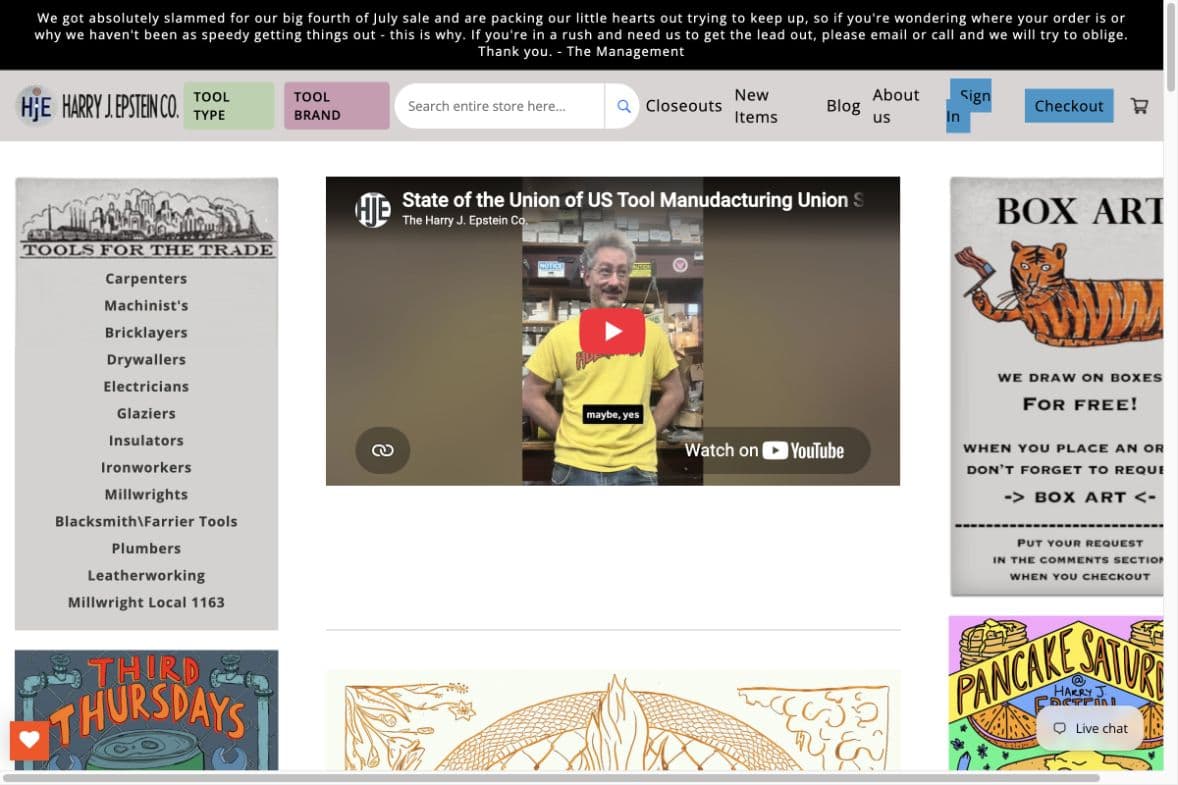
Public e-commerce surface
The current storefront brings product discovery, customer language, editorial voice, video, promotions, and ordering into one maintained public system.
Public storefront captured July 2026. It shows the maintained customer-facing system, not private analytics or internal operations.
View Harry J. Epstein Company public websiteanalytics summary / 02
Public-safe analytics summary
Impact framed as a contribution to online growth without exposing private dashboards or internal revenue detail.
template / 03
Content and voice system
Reusable patterns for preserving the company's distinctive public voice across product, marketing, and support surfaces.
workflow / 04
Maintenance-to-handoff specimen
A public-safe reconstruction shows how recurring questions became well-scoped requirements, incremental releases, verification, reusable patterns, and owned next actions.
Scope and sources
Known
Jamie contributed long-term web, e-commerce, analytics, marketing, content, and operations improvements for an 80+ year-old legacy business.
Open
Internal workflow diagrams and detailed revenue breakdowns require separate review before publication.
Protected
Private dashboards, credentials, customer data, internal revenue detail, vendor terms, and sensitive operating practices stay offline.
Source basis: Public website, approved public-site screenshot, public-safe summary, resume-backed impact claims, and private materials intentionally omitted.
Claim and care limits
No private analytics dashboards, revenue details, passwords, customer data, vendor information, or internal operational materials are published.
Use only public-safe claims and approved screenshots. Treat metrics as contribution language unless Jamie approves more precise wording.
Public links
Credits
- Jamie Burkart
- Harry J. Epstein Company team