JB
Menu

Selected work

These case studies show a recurring pattern: real needs becoming clearer requirements, usable systems, public-facing tools, documentation, decision trails, and durable handoffs.

Showing projects tagged “Web Systems”

Clear filter
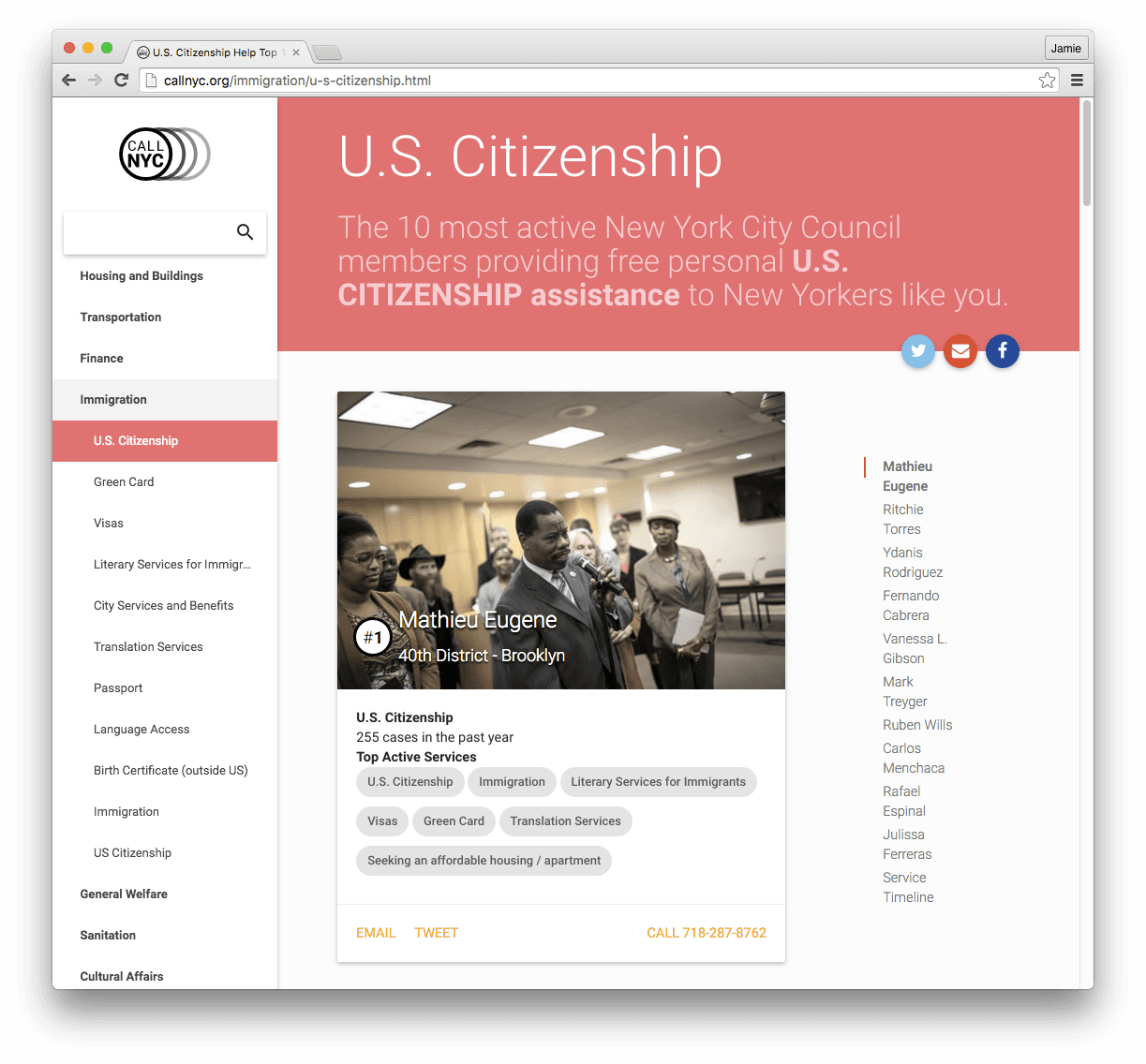
Original CallNYC launch interface showing U.S. citizenship guidance, issue navigation, and a Council member service profile.
The original interface translated civic data into issue pathways, district context, and resident guidance. CallNYC is now archived and unofficial. Original CallNYC press-kit screenshot, 2016.

Civic Prototype

2016 - archived

Full case studypublic-safe

CallNYC.org

Civic data to resident-facing guidance

Built an independent civic-data follow-on translating CouncilStat constituent-services records into resident-facing issue pathways and next-step guidance.

What was emerging
Constituent-services data existed, but residents needed a clearer public-facing pathway from issue to relevant civic office or next step.
What became usable
An archived civic-tech prototype that organized open data into issue pathways, district context, and resident-facing guidance.
Read case study
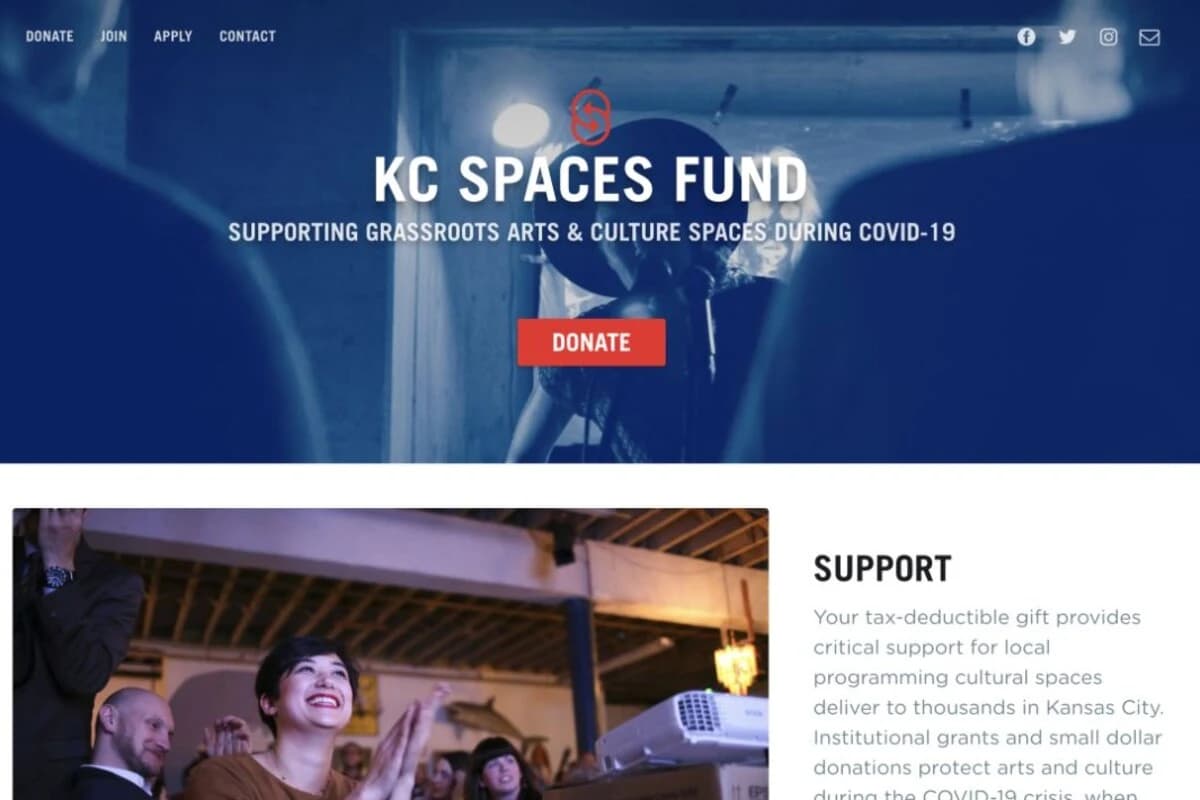
KC Spaces Fund website showing its cultural-space support message, donation route, navigation, and support section.
The 2020 campaign surface brought its purpose, donation, application, sign-up, contact, and fundraising pathways into one coherent public system. KC Spaces Fund public website capture, August 20, 2026; historical campaign content.

Rapid Public Implementation

2020

Short proof pagepublic-safe

KC Spaces Fund

A finished campaign site for cultural-space mutual aid

Built and maintained the campaign's Ghost-based web stack, customized a reusable theme, and implemented donation, application, sign-up, and contact pathways plus a fundraising progress display for a collaborator-led 2020 mutual-aid campaign.

What was emerging
A fast-moving cultural-space mutual-aid campaign needed a coherent public identity and clear action paths across the website and collaborator-led social channels.
What became usable
A maintained Ghost site with a reusable campaign theme and visible routes to donate, apply, join, contact, and follow fundraising progress.
Read case study
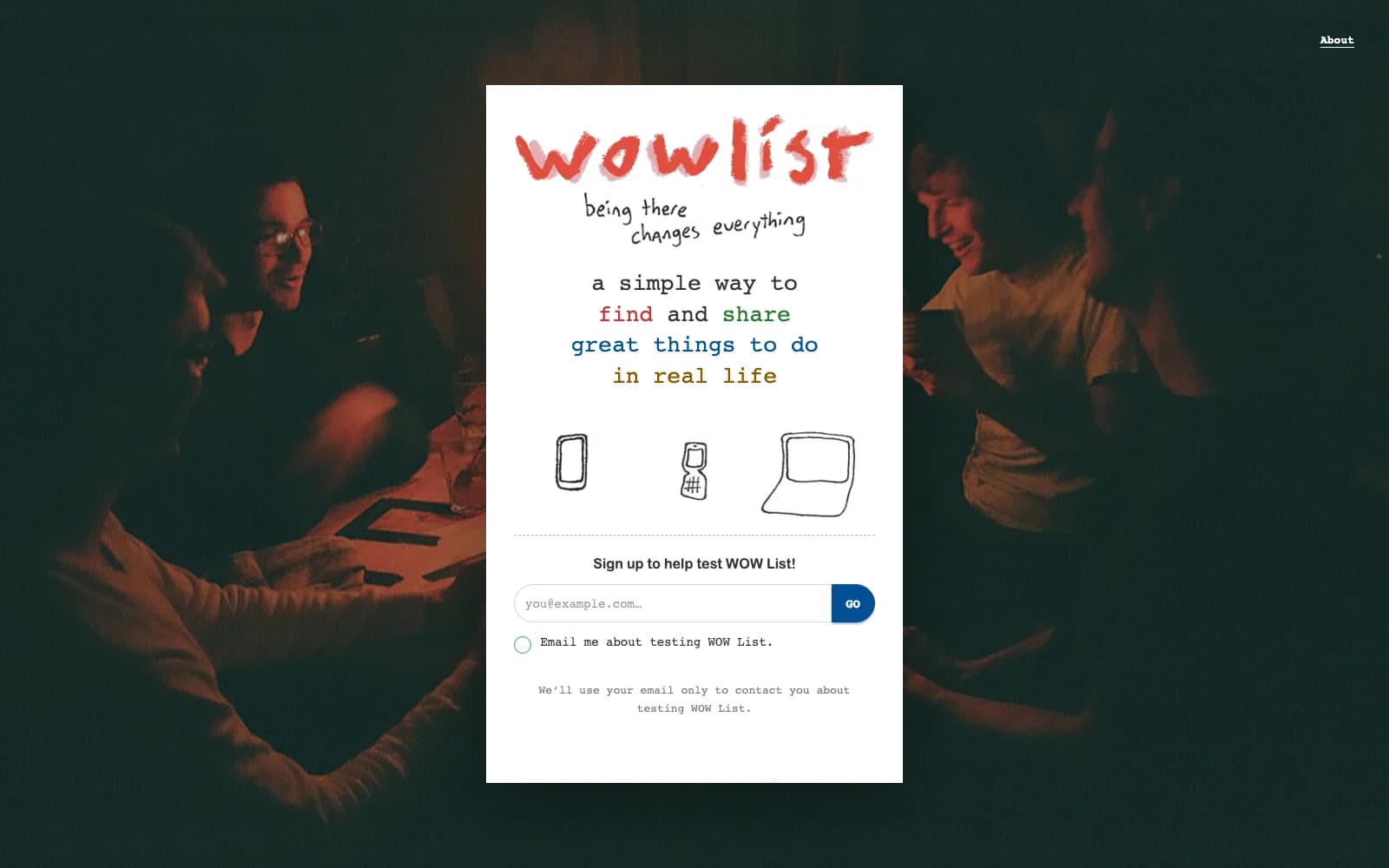
WOW List landing page over a photograph of people gathered around a table, with the words being there changes everything.
WOW List's current threshold pairs its returning interface with a photographic scene of people gathering. Public website capture, August 13, 2026.

Community Platform

2010s; public return in progress, 2026

Short proof pagepublic-safe

WOWList.org

Natural-language community infrastructure for arts and music organizers

Co-founded, co-built, and operated a natural-language community-calendar platform across 35 city ecosystems, supporting local organizers who used WOW List to run calendars, websites, and email lists for their own scenes.

What was emerging
DIY organizers needed lightweight ways to distribute events and maintain community visibility across scenes without relying on one centralized editorial calendar.
What became usable
A natural-language, collaboratively editable event system that turned community vocabulary into followable keyword calendars and organizer-facing distribution workflows.
Read case study

Sources and notes

These notes preserve what each source supports and where its limits remain. See something that needs correction? Contact Jamie.

View 2 source notes
  1. [1] Jamie Burkart and Codex, RFC 0005: Three-Layer Knowledge Graph and Governed Source Materialization, exploring design record, August 10, 2026.

    The RFC documents the three graph responsibilities and projection boundary; its exploring status is part of the evidence.

    Boundary: This source does not establish a completed migration, a finished product, client adoption, permission to access or publish protected material.

  2. [2] Jamie Burkart and Codex, RFC 0006: Federated Knowledge Exchange and Release Receipts, proposed design record, August 11, 2026.

    The RFC documents federation, local repository authority, transport boundaries, and human release control; its proposed status is part of the evidence.

    Boundary: This source does not establish a universal repository topology, automatic publication authority, a completed production deployment, client adoption.